The Great Race of Yith and the Elder Things
The Colour Out of SpaceThe Great Race of Yith and the Elder Things are linked by a conquest that never became a secure peace. The Great Race drove the Elder Things beneath the surface and sealed their routes into the outer world, but later signs of renewed activity made the buried enemy a lasting source of fear. The Great Race’s precautions, and its eventual plan to flee across time, reveal a relationship shaped less by triumph than by the knowledge that containment might fail.
Two Incompatible Forms of Life
The account places the Elder Things on Earth about six hundred million years ago, after they had crossed space from universes immeasurably distant. They had dominated Earth and three other planets in the solar system. Their existence only partly conformed to ordinary materiality: their senses did not include sight, and their perception formed a nonvisual pattern unlike that of terrestrial organisms. They could pass their senses through material barriers, but their substance could not; certain forms of electrical energy could destroy them. They could move through the air without visible wings or another apparent means of levitation, and they required a peculiar kind of housing. Their minds were so unlike those of the Great Race that the two could not exchange consciousness.
The Great Race belonged to a later but still immensely ancient phase of planetary history. Its minds had come from Yith, and its defining advantage was the ability to project consciousness through time and learn from other ages. The narrative places both races within a much larger succession of dominant life-forms, unsettling any human-centered account of history: civilizations and conflicts could precede humanity by hundreds of millions of years, while their surviving traces remained legible only in fragments.
Conquest and Containment
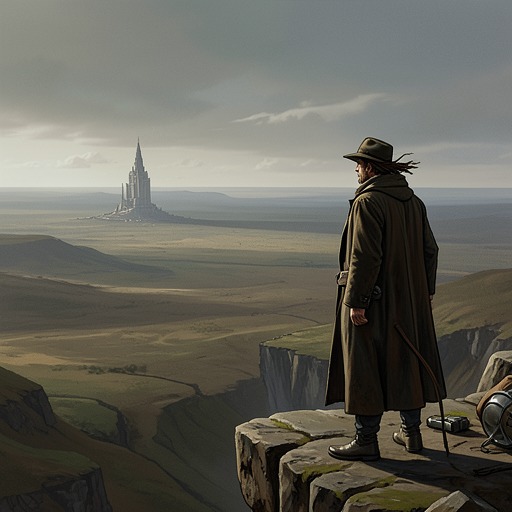
When the Great Race arrived on Earth, the Elder Things had built basalt cities of windowless towers and preyed upon the beings they encountered. The Great Race used instruments of its own making to subdue them. It drove them into caverns of the inner Earth, which the newcomers had already connected to their dwellings, then sealed the entrances and occupied most of the conquered cities. Some buildings were left intact, not simply from indifference or scholarly interest, but for reasons associated with superstition.
That decision left the victory materially incomplete. The sealed passages and surviving structures preserved the history of the conquest while also marking places where the old enemy might remain accessible. As geological change choked some routes and altered the underground landscape, the Great Race closed many paths permanently. It retained a few sealed trap-doors for strategic use, should the Elder Things break through elsewhere. Architecture thus recorded both the Great Race’s power and its inability to treat defeat as final: the towers and blocked approaches were reminders of an opponent confined, not erased.
Resurgence and a Culture of Fear
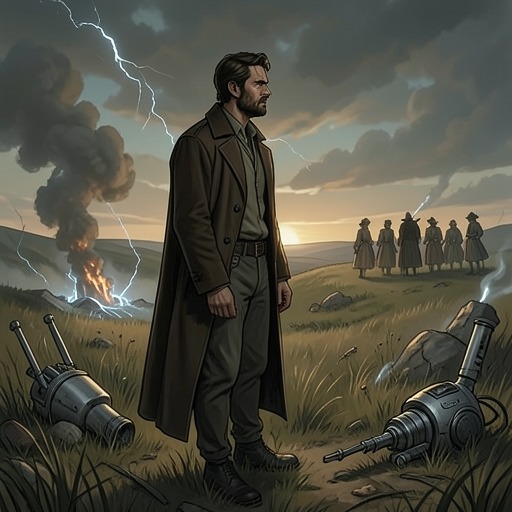
Across the aeons, the Great Race detected signs that the Elder Things were becoming stronger and more numerous in the inner world. Sporadic incursions occurred in remote cities and in abandoned Elder Thing settlements where routes to the depths had not been properly sealed or guarded. These episodes prompted stricter precautions and a lasting change in the Great Race’s collective outlook. The account conveys their effect partly through what the Great Race would not discuss: the subject was taboo, and the Elder Things’ appearance remained undescribed in the narrator’s sources. Only scattered reports associate them with extreme mutability, temporary invisibility, control or military use of great winds, whistling sounds, and immense tracks marked by five circular toe impressions.
The silence was not evidence that the danger had passed. Great Race members avoided deliberate reference to the matter, and the common records disclosed little. What could be inferred came from fragments preserved by unusually observant captive minds. The silence itself therefore becomes part of the relationship: a people capable of gathering knowledge across time nevertheless kept this particular history obscured, as if repeated attention to the buried enemy could not be separated from the fear of its return.
The Foreseen Return
The Great Race’s deepest fear concerned a future, final irruption. Its projections through time had shown a catastrophe associated with the Elder Things, and the Great Race understood the eventual attack as vengeance rather than an effort to reclaim the surface. It also knew, from its view of later planetary history, that subsequent races would live without further disturbance from these beings. The Elder Things would be dead by the age of the post-human beetle race.
That knowledge did not make the Great Race’s position comfortable. It kept powerful weapons ready while maintaining the taboo around the threat, and planned to send millions of its minds forward into the safer future when the feared catastrophe approached. Its ability to foresee distant outcomes thus served not to prevent the conflict but to escape its consequences. The relationship ends, in the available account, not with reconciliation or a decisive final battle, but with containment, vigilance, and anticipated flight. The Elder Things’ eventual extinction lies beyond the Great Race’s own threatened era; until then, sealed trap-doors and dark towers embody a peace maintained under the shadow of a possible breach.